If you own a vehicle in Hawaii — or you’re planning to register one — you may be wondering how long license plates are issued and how long they remain valid. This is a common question for drivers who want to stay compliant with local regulations, as well as for those using a Hawaii license plate lookup tool to research vehicle history records.
The answer depends on understanding two important factors: the physical lifespan of the plates and the legal validity tied to your specific island county registration. In Hawaii, license plates are designed for long-term use, but their legal status depends entirely on keeping your annual registration current. Let’s explore how it all works.
Who Issues License Plates in Hawaii?
Unlike most states, Hawaii does not have a centralized, statewide Department of Motor Vehicles (DMV). Instead, license plates are issued and managed by individual county finance departments:
- City and County of Honolulu (Oahu)
- County of Maui (Maui, Molokai, Lanai)
- County of Hawaii (The Big Island)
- County of Kauai (Kauai)
When you register a vehicle, the county assigns a physical plate that is uniquely tied to that specific vehicle chassis rather than the driver.
Do License Plates Expire in Hawaii?
Here’s the key takeaway:
License plates in Hawaii do not typically expire physically — but the registration associated with them must be renewed every year.
This means:
- Plates can remain in use for the entire operational life of the vehicle.
- There is no fixed expiration date for the physical aluminum plate.
- Annual registration determines whether the plate is legally valid on public roads.
If your registration expires, your license plates become legally invalid — even if they are still attached to your bumper.
Registration Renewal in Hawaii
Hawaii requires vehicle owners to renew their vehicle registration annually in the county where the vehicle is physically operated.
What does renewal involve?
Each year, you must:
- Pay registration fees (calculated by county weight taxes and state fees).
- Provide an active Hawaii Motor Vehicle Insurance card.
- Pass an annual safety check to get an electronic confirmation.
- Receive a new colored registration validation tag (sticker).
The validation tag is placed on the top right corner of your rear license plate (or a dedicated plate bracket) and displays the exact expiration year and month.
What happens if you don’t renew?
Failing to renew your registration on time results in immediate consequences:
- Late fees and flat tax penalties ($16.00 for passenger cars; $40.00 for commercial vehicles).
- Traffic citations and moving violations from law enforcement.
- The risk of your vehicle being towed and impounded.
Additionally, an expired registration will flag your vehicle as inactive in public databases. If someone performs a Hawaii vehicle check, the plate will show up as expired or non-compliant.
How Long Do Temporary License Plates Last?
When you purchase a vehicle from a dealership in Hawaii, or when you import a vehicle from the mainland, you may receive temporary tags or a provisional permit.
Temporary plates or permits in Hawaii typically:
- Are valid for 30 to 60 days.
- Allow legal driving while your permanent island county registration is being processed.
- Are issued directly by authorized dealerships or county registration offices.
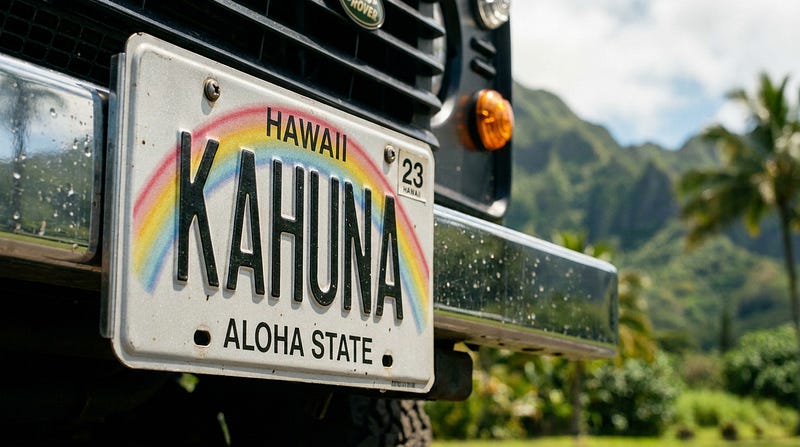
Once your permanent registration is finalized, your standard rainbow-themed plates are issued.
How Long Do Permanent Plates Last?
Hawaii license plates are built for durability to withstand unique island driving environments.
Typical lifespan:
- Plates can easily last 10 to 15 years or more.
- They remain assigned to the vehicle for extended periods.
- They do not require routine, scheduled replacement under normal conditions.
Unlike states that automatically replace plates every few years to preserve reflectivity, Hawaii relies on drivers to monitor the physical condition of their plates.
When Are New Plates Issued?
Even though permanent plates are built to last, there are distinct situations where a county office will issue a brand-new set:
1. First-Time Registration
You will receive new plates when registering a brand-new car, an imported vehicle from the mainland, or a vehicle that has been unregistered for an extended period.
2. Title and Ownership Transfers
Because plates stay with the vehicle in Hawaii, they typically transfer to the new owner during a private sale. However, if the plates are outdated, heavily worn, or a specialty plate is removed by the seller, new standard plates will be issued to the buyer.
3. Plate Damage, Fade, or Loss
The combination of intense Pacific sun, humidity, and salt air can cause aluminum plates to peel, rust, or lose their reflective coating. If a plate becomes unreadable, or if it is lost or stolen, you must apply for replacements immediately.
4. Specialty or Organization Plates
Custom plates (such as university or environmental cause plates) are newly minted and issued upon a specific user request.
Do Plates Stay With the Vehicle?
In Hawaii, license plates stay with the vehicle, not the owner.
When a vehicle is sold:
- The seller leaves the plates mounted on the front and rear bumpers.
- The plates transfer directly to the buyer alongside the vehicle title.
- The seller must file a Notice of Transfer within 10 days to release themselves from liability.
This vehicle-based system makes running a vehicle background check highly important for buyers. Since past-due registration fees and back taxes follow the car rather than the person, looking up the plate status protects you from inheriting someone else’s structural debt.
Specialty and Vanity Plates in Hawaii
Hawaii offers a variety of specialty plates, including combat veteran configurations and unique organization designs.
These plates:
- Require annual renewal alongside your standard weight taxes.
- May include additional initial production and annual retention fees.
- Follow the same rules of legal validity as standard plates.
Vanity combinations remain reserved to you as long as your vehicle registration stays current. If the registration lapses completely, the custom text combination may eventually be released back into the county pool for other drivers to claim.
What Happens If Registration Expires?
If your registration is not renewed by the last working day of its expiration month, your license plates lose their active legal status.
Possible consequences:
- Expensive traffic tickets and flat penalties.
- Accumulating delinquent back taxes that compound every year the vehicle remains unregistered.
- Inability to pass your next annual safety inspection without resolving the registration hold.
From an administrative standpoint, a vehicle check will immediately surface these active flags, warning potential buyers or businesses of an outstanding hold.
How to Check License Plate Status
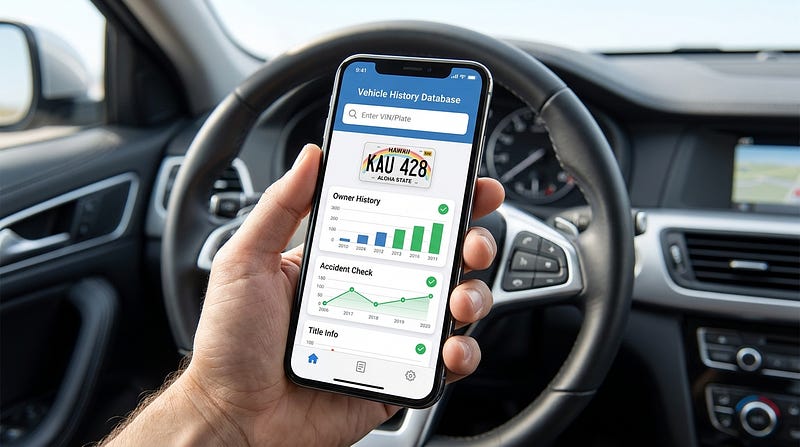
If you want to verify the status of a vehicle, check for outstanding county tax holds, or research a vehicle’s title history, you can access public records.
To check active registration status, verify title history, and view vehicle records online, you can use the lookup utility available at: ???? hawaiilicenseplate.com
These tools help you:
- Confirm if a registration is active, expired, or marked non-operational.
- Review core vehicle details (VIN, make, model, and weight tier).
- Check for existing lienholder or financing flags on the title.
How Long Do Plates Physically Last?
Hawaii plates are manufactured from high-grade aluminum and treated with a reflective sheeting designed to withstand moisture and sunlight.
Average lifespan:
- 10–15 years under typical driving conditions.
Factors affecting durability:
- Salt Air Corrosion: Vehicles parked near windward coastlines experience faster oxidation and peeling.
- UV Exposure: The intense tropical sun can eventually fade the red lettering and rainbow graphic.
- Physical Debris: Loose gravel on mountain or valley roads can chip away the protective coating.
If a plate becomes faded or damaged to the point where law enforcement cannot clearly read the alphanumeric characters from a distance, it must be replaced.
Do You Need to Replace Old Plates?
You are required to replace your plates if:
- They are physically damaged, bent, or completely unreadable.
- One or both plates have been lost or stolen.
- You are transferring a vehicle and the current plates fail to meet county visibility standards.
Replacement requests are processed directly at your county’s motor vehicle registration office or local satellite city hall.
Key Takeaways
Here’s a quick summary of how long license plates are issued and remain valid in Hawaii:
- No Physical Expiration: Plates are built for long-term use and do not have a fixed physical expiration date.
- Annual Renewal Required: Legal validity depends entirely on renewing your registration and passing your safety check every year.
- Temporary Tags: Temporary plates or permits are typically valid for 30 to 60 days.
- Plates Stay with the Car: Unlike many mainland states, Hawaii license plates remain attached to the vehicle during a transfer of ownership.
- Affordable Replacements: If plates become corroded by salt air or faded by the sun, replacements can be ordered through your county finance office for a small fee ($5.00 for plates, $0.50 for emblems).
Final Thoughts
Hawaii’s decentralized, county-based license plate system balances structural durability with strict annual safety and registration standards. While your physical plates can last for over a decade without replacement, their legal power on the road relies completely on your yearly renewal steps.
For island drivers, staying on top of your annual Periodic Motor Vehicle Inspection (PMVI) and clearing county traffic fines on time is the most critical responsibility. This ensures your registration stays active and your vehicle remains fully compliant.
Whether you are renewing your own tabs, transferring a title, or researching records using a tool like hawaiilicenseplate.com, understanding how long license plates remain valid helps you keep your driving smooth and hassle-free across the islands.